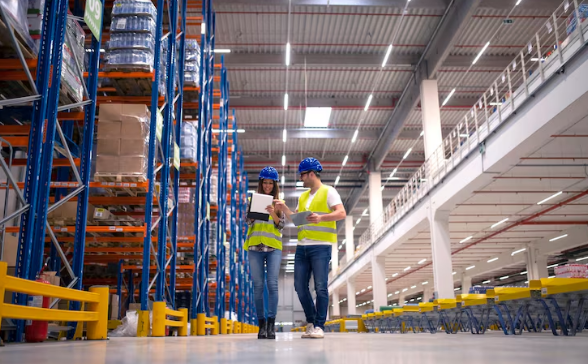
Space has a funny way of disappearing inside a warehouse. A building that felt enormous a few years ago can suddenly seem cramped once inventory grows, new product lines are added, and order volumes increase. Many companies assume the only solution is to move into a larger facility, but that often isn’t necessary.
Storage design plays a much bigger role than people realize. The right warehouse racking system can dramatically increase storage capacity, improve workflow, and postpone costly expansions. The wrong choice can create bottlenecks that affect operations for years.
The challenge is that there isn’t one system that works for every facility. Warehouses have different inventory profiles, operating models, and growth plans. Choosing the right setup requires looking beyond how many pallets can fit in the building and focusing on how the entire operation functions.
Storage Capacity Starts With Understanding Your Operation
Many companies begin shopping for racking by comparing products or pricing. While cost matters, storage systems should first be evaluated based on how inventory moves through the warehouse.
Facilities storing large volumes of identical products often have very different needs than warehouses handling thousands of SKUs. Some businesses prioritize storage density, while others value quick access to every pallet. Seasonal fluctuations can also influence the ideal design because inventory levels may vary significantly throughout the year.
Understanding inventory characteristics is usually the first step toward selecting effective warehouse racking solutions. Factors such as pallet dimensions, product weight, turnover rates, and picking frequency all influence which layout will create the most efficient operation.
A system that looks impressive on paper may become frustrating if it slows down picking or limits access to frequently used products. Storage capacity and operational efficiency need to work together rather than compete with each other.
Selective Racking Remains Popular for a Reason
Selective racking is often the first option businesses consider, and despite the arrival of more advanced systems, it remains one of the most practical choices for many warehouses.
Its biggest advantage is accessibility. Every pallet can be reached directly without moving other inventory. This makes it ideal for facilities carrying a wide variety of products or processing orders that require frequent picking.
Selective systems are also easier to expand or modify as business needs change. New rack bays can be added gradually, allowing companies to increase storage capacity over time without completely redesigning the facility.
The downside is that selective racks require wider aisles and more open space. Businesses seeking maximum storage density may find that other pallet racking systems make better use of the available square footage.
Still, for warehouses that prioritize flexibility and accessibility, selective racking continues to be one of the most practical investments available.
High-Density Storage Creates More Space Without Expanding
Some facilities simply need to store more inventory within the same footprint. In those cases, high-density storage systems can make a dramatic difference.
Drive-in and drive-through racks reduce aisle space, allowing forklifts to enter storage lanes directly. This creates room for significantly more pallets compared to traditional layouts.
Push-back systems offer another approach by storing pallets several positions deep while maintaining relatively quick access. Pallet flow racks use gravity to move inventory through storage lanes, making them particularly useful for operations with consistent product movement.
These systems can increase capacity substantially, but they aren’t always the best choice for every business. Warehouses with highly varied inventory or unpredictable picking patterns may sacrifice efficiency if storage becomes too dense.
Storage density sounds attractive, but it should never come at the expense of workflow. The most successful warehouse racking solutions strike a balance between maximizing space and maintaining operational speed.
Vertical Space Is Often Underused
Many warehouses focus heavily on floor space while ignoring the empty air above them.
This is understandable because expanding upward can seem more complicated than rearranging existing racks. In reality, vertical storage is one of the most effective ways to increase capacity without relocating.
Modern warehouse racking system designs take advantage of building height by extending storage vertically and creating more pallet positions within the same footprint. Facilities with high ceilings often discover they can increase storage substantially without adding square footage.
There are practical considerations involved. Forklift equipment may need upgrades, safety measures become more important, and building structures must support the design. Even with these factors in mind, expanding upward is frequently more affordable than leasing additional space or constructing a new warehouse.
Businesses facing storage limitations sometimes overlook this opportunity and spend years working around capacity problems that could have been solved with a smarter layout.
Storage and Automation Are Becoming Closely Connected
Warehouses are evolving quickly, and storage systems are evolving along with them.
Racking no longer exists independently from conveyors, robotics, and software. Storage layouts increasingly need to support automated processes, which means planning for future technology is becoming part of storage design.
Companies investing in warehouse automation often redesign their storage systems at the same time. Automated Storage and Retrieval Systems rely on specially engineered racks. Autonomous mobile robots require layouts that support efficient travel paths. Conveyors influence aisle spacing and product flow throughout the facility.
Planning these systems together usually produces better results than introducing automation years after the storage layout has already been established.
This doesn’t mean every warehouse needs robots or fully automated operations. It simply means storage decisions made today should consider where the business may be headed in the future.
Warehouses that ignore this connection sometimes discover that adding automation later becomes more expensive than expected because their existing infrastructure wasn’t designed to accommodate it.
See also: 10 Proven Strategies to Grow Your Business in 2026
Flexibility Often Matters More Than Perfection
Business conditions rarely stay the same for very long.
A warehouse serving regional customers today may expand nationally in a few years. Product lines evolve, customer expectations change, and inventory requirements shift over time.
Storage systems need to adapt to those changes.
Flexible pallet racking systems allow businesses to reconfigure layouts, adjust beam heights, and add capacity without replacing the entire structure. Modular designs provide room for growth while reducing the risk of investing heavily in a system that becomes outdated.
This flexibility becomes especially valuable during periods of uncertainty. Companies don’t always know what their operations will look like five years from now, but they can create storage environments capable of evolving alongside the business.
The most expensive storage system isn’t necessarily the one with the highest price tag. Sometimes it’s the one that locks a company into a layout that no longer serves its needs.
Safety and Efficiency Need Equal Attention
Storage capacity means very little if employees struggle to work safely and efficiently.
Racks that are overloaded or poorly maintained create risks that extend beyond damaged inventory. Forklift accidents, structural failures, and product losses can disrupt operations and create significant costs.
Well-designed warehouse racking solutions account for traffic flow, load capacities, aisle widths, and routine inspection requirements. Safety isn’t something added after installation. It should influence every decision during the planning process.
Facilities that prioritize both safety and efficiency tend to perform better over the long term because employees can work confidently and inventory remains protected.
Even small details matter. Clear labeling, proper spacing, and regular inspections can prevent problems that might otherwise grow into costly disruptions.
Looking Beyond Upfront Costs
Price naturally influences storage decisions, but focusing only on the initial investment can be misleading.
A cheaper system may require modifications within a few years. It might slow picking operations or limit expansion opportunities. Those costs don’t appear on the purchase order, yet they affect the business every day.
On the other hand, the most sophisticated storage solution isn’t automatically the best investment either. Some facilities simply don’t need highly specialized systems.
The best storage strategy balances cost, efficiency, flexibility, and future growth. Businesses that take this broader view often achieve stronger long-term results because their infrastructure continues supporting the operation as it evolves.
Working with experienced storage specialists can make this evaluation much easier. The right partner considers inventory, workflow, facility constraints, and growth plans before recommending a solution.
If you’re exploring new storage options or planning upgrades to your facility, Reach Out to Us to discuss storage strategies built around your operational goals. The right racking system doesn’t simply create more space. It creates a warehouse that works smarter, adapts more easily, and supports growth for years to come.