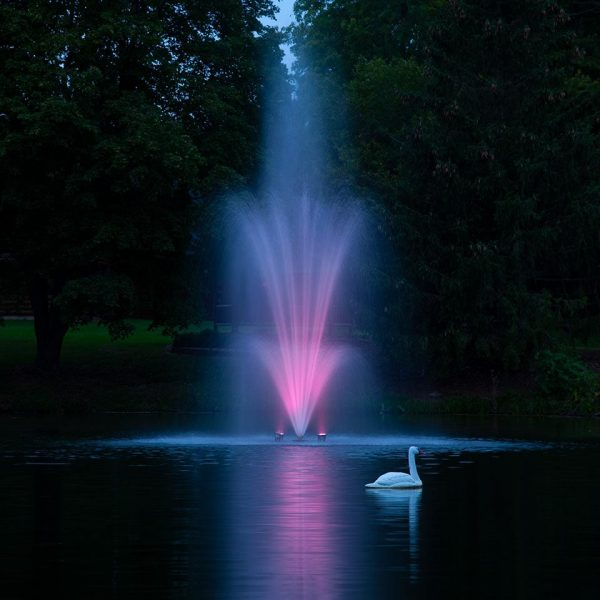
The number on the box and the result in your water rarely match. Spec sheets for pond fountains lead with their best figures, measured under conditions you will never have in your backyard. The photo shows a tall, even spray. The page lists a big gallons-per-hour rating. Then the unit arrives, and the display looks smaller than you pictured.
None of that is a lie, exactly. The honest information sits in the fine print, not in the headline number. Learning to read pond fountain specs the right way saves you from a weak spray, a clogged intake, and a power bill you did not see coming. Here is what the sheet glosses over.
Why the GPH Number Looks Better Than it Performs
GPH stands for gallons per hour, and it is the spec everyone stares at first. The catch is how it gets measured. That rating comes from the pump sitting flat on the ground, pushing water with no lift at all. Once the water has to climb into a spray, the flow falls off.
How much? Quite a lot. Fountain Tech notes that a pump rated at 500 GPH at zero feet might only push 200 GPH at five feet of height. Other pump guides put the loss near ten percent for every foot of lift. So the spray in the catalog shrinks once your real head height enters the picture. Ask for the performance chart at your spray height before you trust the big number.
What the Nozzle Quietly Takes Away
Here is a second trap. The GPH figure is measured before the water reaches the nozzle. Decorative spray patterns come from nozzles with small holes, and those holes restrict flow. The water that actually leaves the fountain, the net flow, runs lower than the raw rating suggests.
This matters most for aeration. Net flow, not the headline GPH, decides how much oxygen the fountain moves into the water. Aerating fountains skip the nozzle and push more water, which is why a plainer unit often oxygenates better than a fancy one. A busy, eye-catching spray can do less for your fish than its spec sheet hints. The sheet almost never prints a net flow figure, so you have to ask. If oxygen is your main reason for buying, that one question can change which fountain you pick. A wider, lower pattern usually moves more water than a tall, narrow geyser, even when the geyser looks more impressive on the page.
The Spec that Predicts Your Power Bill
Horsepower and voltage sit near the top of most sheets. Neither one tells you what the fountain costs to run. For that, you want the wattage, or the amp draw. Horsepower describes the motor, not your monthly bill, and two units with the same horsepower can pull different amounts of power.
The wattage line is the one to find. A 200-watt fountain runs somewhere around 175 dollars a year at average electric rates. A lower-watt model that does the same job pays you back over the years of running. So before you compare price tags, compare the watts. That single number follows you long after the purchase. A cheaper fountain that draws more power can cost you more across five years of running than a pricier one that sips electricity.
See also: 10 Proven Strategies to Grow Your Business in 2026
The Details Hiding in the Fine Print
A few specs barely make the page, yet they decide whether the fountain works for your setup. Scan for these before you buy:
- Cord length, which sets how far from shore the unit can sit and reach an outlet
- Minimum operating depth, since shallow water lets the intake pull debris off the bottom
- Maximum head, which marks the height where flow drops to nearly zero, is not a usable spray height.
- Net flow after the nozzle, the number that drives real aeration
- Voltage, because larger units need 240 volts and often an electrician to wire them
Miss the cord length, and you end up moving an outlet or buying a longer run. Miss the depth rating, and the pump chews on muck all season.

How to Read a Pond Fountain Spec Sheet Before You Buy
Start with your own pond, not the catalog. Measure the volume, the height you want the spray to reach, and the distance from the water to your nearest outlet. Those three numbers turn a vague wish into a real shopping list.
Then work down the sheet with your numbers in hand. Match the GPH to your head height using the performance chart, not the front-page rating. Check the wattage for the running cost. Confirm the cord reaches and the minimum depth fits your pond. The pond pump size calculator on the Fountain Tech site does some of this math for you, which beats guessing in the store.
The spec sheet is not out to trick you. It just shows its best face, built on a tall spray, perfect voltage, and zero head height. Your pond has wind, real depth, and an outlet sitting some distance away. Read every number for your conditions instead of the lab’s, ask for the performance chart, and check the watt and cord lines before you pay. Do that, and the fountain you unbox behaves like the one you pictured.