A container ship leaves Shanghai for Rotterdam. The route runs through the South China Sea, the Indian Ocean, the Strait of Malacca, and into the Suez Canal. Forty days at sea, give or take, with transit times between 30 and 45 days from China to Europe. With the Red Sea diversion still in play, it is sometimes closer to fifty. That is a long time for a tracker to stay alive on a single battery, and the reason why a solar powered GPS tracker is now standard kit for routes like this.
Most operators have run into this scenario at least once. The device pings reliably for the first two weeks. Then the reports thin out. By day 30, the tracker has gone silent. The container reaches port, gets craned onto a lorry, and the data picks up again at the destination warehouse. The middle of the journey, the part that took the longest, ran without supervision. A solar powered GPS tracker is built to close that gap.
Here is why that gap matters.
The Battery Maths Most Spec Sheets Hide
Battery-powered trackers advertise impressive run times. Sixty days, ninety days, sometimes more. Read the fine print, and the picture changes.
A tracker rated for 90 days at one ping every six hours will do far less at hourly reporting. Reduce the interval further, perhaps every fifteen minutes through a known piracy stretch, and the battery drains faster still. Cold weather shaves more off the figure. Older batteries, deployed for the second or third trip, hold less charge than the spec sheet promises.
So the headline number is real. It just rarely matches the way operators actually use the device on a long sea leg.
Why Cellular Alone Will Not Save You
Even if the battery survives, cellular coverage will not. Past the coastal range, the signal drops off. Trackers running on cellular alone go quiet for days, sometimes weeks, in the middle of a voyage.
The newer designs add satellite fallback for the deep-ocean stretch. That works, but every satellite ping costs more power and more money than a cellular one. Now stack that on top of an already strained battery, and the tracker becomes a race against itself. Reporting intervals get stretched. Coverage gets thinner. The owner gets a sparser picture, not a fuller one.
If the battery dies before port, even satellite fallback stops mattering. The tracker is just dead weight on a steel box at that point.
Where Solar Changes the Picture
Solar-powered GPS trackers approach the problem from the other end. Instead of conserving a finite battery, they top up continuously while exposed to daylight.
On a container ship, that exposure is more useful than people first assume. Containers stored on deck, which are most of the upper tiers on a typical cellular vessel, spend the entire voyage in open daylight. A tracker mounted on the roof or upper face of the container catches that light without needing direct sun. Even cloudy daylight harvests enough power to keep the device reporting.
The result is a tracker that does not need to ration. It can ping at sensible intervals through the entire crossing, including the long ocean stretches where battery devices usually fall silent.
See also: 10 Proven Strategies to Grow Your Business in 2026
What About Containers Below Deck
This is the question every reasonable buyer asks. The honest answer is that solar trackers are not the right pick for every container.
Below-deck stowage is darker. The tracker still runs, but on a slow trickle of stored charge between port calls. The math depends on the design. Quality solar units pair the panel with a long-life internal cell. That cell holds enough power to keep reporting through dark stretches and recharge during the surface windows.
For containers that move regularly between deck and below-deck stowage across multiple voyages, the cycle balances out. For containers that live below deck almost permanently, a different tracker may serve better.
Where Solar Trackers Earn Their Keep
A few patterns hold up after talking to operators who have run both types.
- Long-haul container fleets where the owner needs continuous tracking across multiple journeys, not just one shipment.
- Reefer containers on long routes, where condition data needs to be kept coming through the entire voyage.
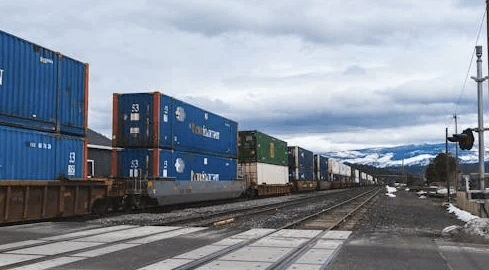
- Chassis, trailers, and rail wagons that sit outdoors and move sporadically, where battery devices waste power in storage.
- High-value or sensitive cargo on routes through known piracy or theft hotspots, where coverage gaps become claim-worthy events.
- Environmentally conscious operators looking to reduce battery waste across their tracking fleet.
The choice is not solar versus battery for every shipment. It is choosing the right device for the route and the asset.
What You Walk Away With
Continuous coverage on the longest leg of the journey. Fewer dead trackers at the destination. A device that earns its keep over years, not weeks. And, perhaps most quietly, a smaller pile of discarded electronics at the end of every fleet refresh cycle.
The sea leg used to be the dark middle of every voyage. With the right hardware, it does not have to be anymore.