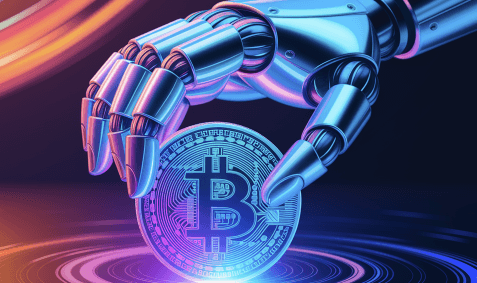
AI-powered tooling is accelerating data-driven trendlines, modular components, and governance experiments that shape tokenomics and protocol design. Strong signals emerge on both on-chain and off-chain activity, enabling sharper market insight and risk forecasting. As AI governance matures, transparency and robust evaluation become essential, with adaptable architectures and ethical safeguards guiding scalable, freedom-friendly ecosystems. The balance between innovation and regulation invites ongoing scrutiny, and the next phase may redefine security, compliance, and resilience in decentralized networks.
What AI-Driven Trends Are Shaping Crypto Today
AI and cryptocurrency are increasingly intertwined as researchers and practitioners leverage machine learning to enhance market analysis, security, and product design.
The landscape reveals data-driven trendlines, modular AI tools, and governance experiments guiding tokenomics design.
AI governance frameworks address risk, accountability, and compliance while enabling scalable protocols.
Practitioners seek transparent models, robust evaluation, and adaptable architectures to sustain innovation and freedom in decentralized ecosystems.
Smarter Markets: AI’s Impact on Trading, Analytics, and Risk
Smart markets are increasingly shaped by AI-powered trading, analytics, and risk assessment, where data-driven models process vast on-chain and off-chain signals to identify patterns, optimize execution, and forecast volatility.
This approach enables AI trading efficiency while analytics risk assessment improves risk management, governance, and oversight.
It prompts AI governance, ethics regulation discussions, balancing innovation with safeguards for freedom-loving markets.
Securing Networks and Smart Contracts With AI
In the wake of AI-enabled markets, securing networks and smart contracts demands a rigorous focus on real-time threat modeling, automated code analysis, and continuous verification across on-chain and off-chain interfaces.
The approach favors secure networks, anomaly detection, and decentralization security, guided by ai governance.
Assessments emphasize threat modeling, ongoing auditing, and resilient automation to safeguard smart contracts and ecosystem integrity.
Regulation, Ethics, and Governance in AI-Enabled Crypto
Regulation, ethics, and governance occupy a pivotal crossroads in AI-enabled crypto, where policy clarity, market integrity, and technological capability must align. This analysis examines how governance frameworks shape risk management, revealing pragmatic trade-offs between innovation and compliance. Data-driven insights emphasize transparent policy development, robust due diligence, and scalable governance to foster trust, while minimizing regulatory fragmentation and unintended consequences.
See also: globecave
Frequently Asked Questions
How Will AI Influence Crypto Tax Reporting and Compliance Automation?
AI tax automation will streamline crypto tax reporting and compliance, enabling real-time reconciliation and error reduction. Compliance analytics provide actionable insights, while automation scales with portfolios, supporting auditors and regulators. This approach suits freedom-loving users seeking data-driven clarity.
Can AI Predict Crypto Adoption Timelines Across Industries?
AI may offer probabilistic models for predictive adoption across industries, but forecasts hinge on data quality; practitioners seek pragmatic, data-driven timelines, acknowledging uncertainty, sector-specific drivers, and the freedom to adapt as evidence accumulates in industry timelines.
What Are Ai-Driven Methods for Verifying Token Authenticity?
Coincidence highlights methods for verifying token authenticity: machine-assisted anomaly detection identifies token anomalies, while AI governance frameworks enforce compliance. The approach is data-driven, pragmatic, and curious, empowering freedom-seeking audiences to trust digital assets responsibly.
Are There AI Tools Improving Cross-Chain Interoperability Security?
AI tools exist that improve cross-chain interoperability security, though trade-offs persist. The assessment notes AI security and cross chain interoperability privacy concerns, with pragmatic, data-driven findings guiding freedom-loving audiences toward transparent, verifiable, privacy-preserving interchain solutions.
How Might AI Affect Stablecoin Governance and Resilience?
Stablecoin governance may become more data-driven, with resilience metrics guiding policy choices; AI could simulate stress scenarios, revealing vulnerabilities and informing adaptive frameworks, while transparency and modular controls foster autonomous, auditable resilience across diverse issuer ecosystems.
Conclusion
AI-enabled crypto ecosystems are maturing through data-driven signals, modular components, and real-time risk models. Markets become smarter with predictive analytics, while networks and smart contracts gain resilience via automated verification. Governance frameworks, informed by transparent evaluation and ethics, steer innovation without stifling growth. The balance of speed and oversight remains critical; continuous experimentation paired with robust safeguards is essential. As the adage goes, “measure twice, cut once”—and in crypto, measure often to build securely.